A Nuclear Step in the Wrong Direction
Forget the treaties, let's explode some nukes again, directs Trump

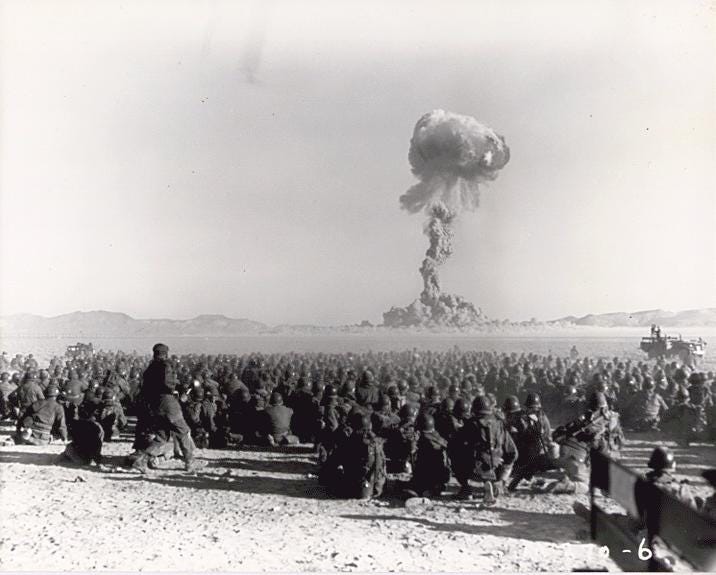
A Return to Nuclear Testing?
It began, apparently, with a misunderstanding, a misreading of the news at the very top of the global power pyramid.
Specifically, the announcement that’s eliciting eyebrow raising and worldwide head-scratching — “What the heck triggered that?” — started, it seems, with news about Russia that was, perhaps, misunderstood by somebody up high.
Or so some pundits are speculating. Because nobody is exactly sure why President Donald J. Trump wants to open the Pandora’s Box of nuclear testing again.
Did Russia Plant the Seed?
In recent days, a flurry of articles have notified of Russia’s tests of advanced weapons — a new intercontinental ballistic missile as well as a novel torpedo — both of which are capable of carrying nuclear bombs.
But while Russia announced that it had tried out these cutting-edge delivery systems, with Putin salivating for the camera as he described their amazing abilities, Russia did not test any nuclear weapons — and it’s not like you can just sneak a little nuclear detonation these days without it being detected.
But even though Russia did not recently flex its nuclear muscles, KABOOM came the news: President Trump says he’s ordering the US to start testing nuclear weapons again — something it hasn’t done since 1992 and something the country’s nuclear arms experts say is not needed.
“Because of other countries testing programs,” Trump wrote on Truth Social on Thursday, “I have instructed the Department of War to start testing our Nuclear Weapons on an equal basis — immediately.”
And then Trump walked into a conference room in South Korea to meet with Chinese President Xi Jinping in the hopes of taming the world’s most ferocious trade war.
Effective Moratorium
Despite the high rare earth stakes on the table with Xi, I couldn’t stop thinking about Trump’s vow to start nuclear testing anew; for one thing, I kept wondering what he meant saying the US would be conducting nuclear tests “on an equal basis.”
The wording is peculiar, particularly since NOBODY has been trying out their nukes lately — although North Korea conducted a nuclear test in 2017. But Russia hasn’t tested a weapon since 1990; China hasn’t since 1996.
So if Trump wants to test “on an equal basis,” then the US shouldn’t be testing at all, since nobody else is, as demonstrated in the following equation:
(0 + 0 = 0).
But, nope, yep, it sounds like that’s what the US doing — returning to testing nuclear weapons — at least if Secretary Pete Hegseth of the War Department has any say in the matter. It’s actually debatable how much say Hegseth has: although Trump gave his direction to Hegseth’s Department of War, it is actually the Department of Energy that oversees nuclear testing, and that department’s headman Chris Wright hasn’t issued a comment since the hot potato announcement was tossed indirectly into his lap on Thursday.
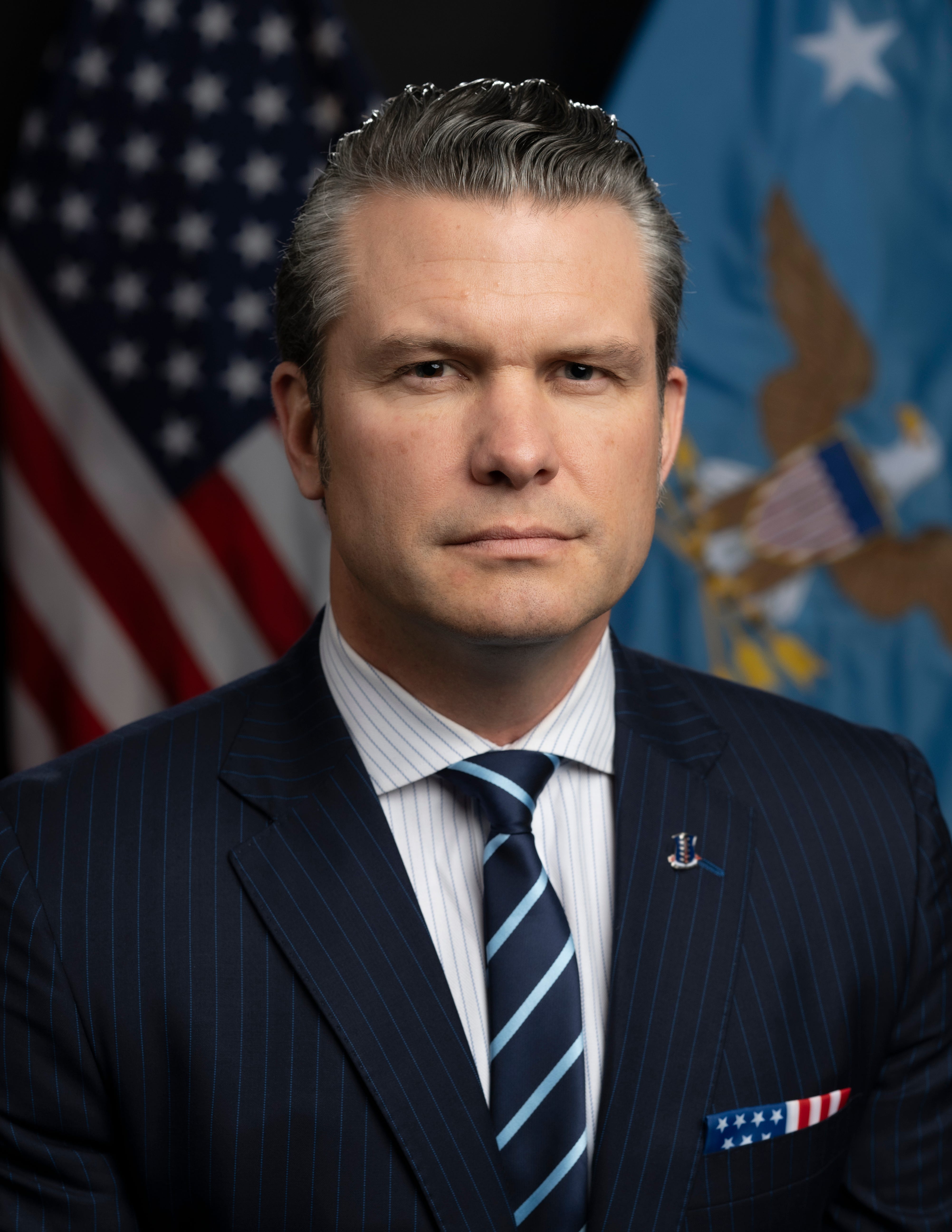
But former Fox newscaster Secretary Hegseth applauds the return to testing idea.
“We need to have a credible nuclear deterrent,” said Hegseth, as reported by the Financial Times, “. . . and resuming testing is a pretty responsible, very responsible way to do that,” Hegseth said.
“It makes nuclear conflict less likely if you know what you have and make sure it operates properly,” Hegseth added, as if the US would just be taking out some nukes for a quick spin, like you do a car that’s been stored for the winter.
Forgotten Cold War Blasts
But what Hegseth, who is 45 years old, can’t recall — because he was just a gleam in his grandfather’s eye back then — is that starting in 1951 and continuing for over a decade, nuclear tests were so frequent in the US and so intense in their explosions that radioactive fallout from atmospheric testing blasted right into American wheat and American livestock and American milk all over the land, even back when milk was so farm fresh and wholesome it was delivered right to your door in glass bottles.
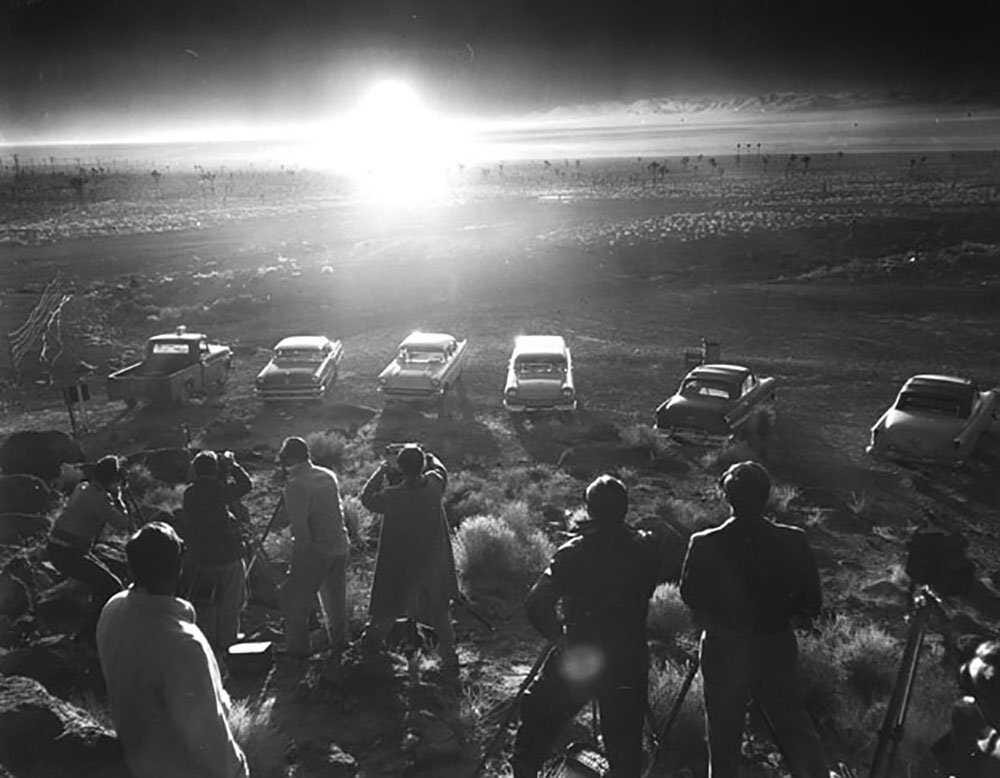
Never mind that the domestic nuclear tests were conducted in Nevada, where tourists headed to viewing spots and piled onto hotel rooftops to take in the colorful blasts. The fallout was picked up by winds and almost the whole continental United States was repeatedly doused with radioactivity.
Whenever a device exploded in the Southwest it blew thousands of miles East; in early 1950s, the New York Times repeatedly reported that radioactive rain was falling on Manhattan, adding that the Atomic Energy Commission assured it was safe.
However, as the rainwater was sucked up by plants, and the plants were eaten by cows, radioactive elements such as strontium 90 — which the body mistakes for calcium — made its way right into the teeth and the bones of American babies and kids, starting even in utero when the fetal skeletons were forming.
And the realization that America was inadvertently poisoning its children with nuclear fallout helped persuade President John F. Kennedy to sign the Partial Test Ban Treaty with Russia and the UK in 1963.
As will be explored in a future post, another factor in signing the treaty was the US had just blasted thermonuclear weapons in the upper stratosphere — thereby creating artificial rings of radiation in the magnetosphere and knocking out a dozen satellites. The realization that the tests were affecting space travel (and Lord knows what else) led to additional pressure on JFK to drop the tests, literally pushing testing underground.
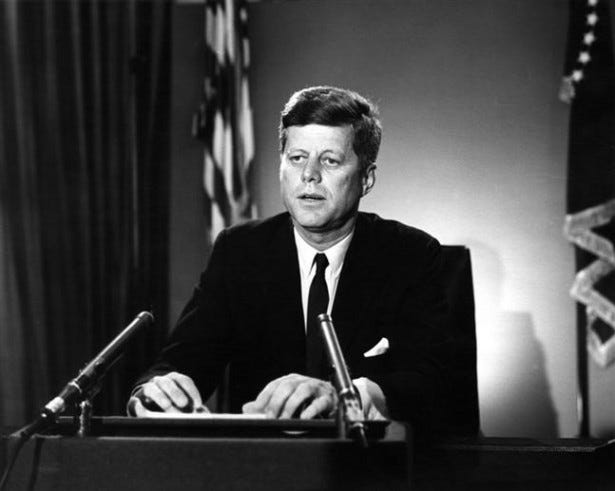
On July 26th, 1963 Kennedy gave an empassioned televised address to a nation still jittery from the two-week Cuban Missile Crisis nine months before. The US, UK, and Russia had concluded “a treaty to ban all nuclear tests in the atmosphere, in outer space, and under water,” Kennedy said to the American public via millions of TVs, most still in black and white.
The agreement did not, however, prohibit underground testing, Kennedy explained. “Nevertheless, this limited treaty will radically reduce the nuclear testing which would otherwise be conducted on both sides,” he said. “It will prohibit the United States, the United Kingdom, the Soviet Union, and all others who sign it, from engaging in the atmospheric tests which have so alarmed mankind — and it offers to all the world a welcome sign of hope.”
By the time Hegseth was born in 1980 his mother didn’t have to worry quite as much; as a result of the 1963 Partial Test Ban Treaty, tests had gone subterranean: while radioactivity could still pollute aquifers, at least it wasn’t raining from the sky and blowing radioactive fallout all over the planet.
Besides, by the 1980s, tests were few and far between in the US at least and not of the intensity they had been starting in the 1950s.
Admitting that there were health consequences to those tests, the US government has paid out over $2.6 billion in compensation to more than 41,000 claimants since 1990 for being exposed to fallout during nuclear testing. Radiation Exposure Compensation Act (RECA) payments have been made to “downwinders” exposed to fallout that strayed far from Nevada as well as “onsite participants” and others involved in the testing who developed radiation-related illnesses.
When Hegseth was 16, nuclear testing of all types, including underground testing, was kinda-sorta-theoretically banned. The Comprehensive Nuclear-Test-Ban Treaty of 1996 was signed by 187 countries, including the US and all the rest of the countries holding nukes; however, none of the nuclear powers, including the United States, have ratified the treaty.
Nevertheless, for 29 years, the Comprehensive Nuclear-Test-Ban Treaty has seemingly worked — with nobody blasting their weapons since 1996, except for North Korea occasionally, but, you know North Korea — always the outlier.
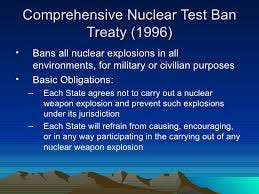
But now Donald Trump has kicked open the door to testing nuclear weapons again — experts are already predicting this will lead to a massive multi-country nuclear test fest during an already tricky and tense moment on the global stage.
And the reason we’re plunging deeper into the danger zone by dropping the nuclear taboo may be simply because of a misread of Russia’s actions, with somebody believing that nuclear bombs had been tested when, in fact, they had not.
Then again, perhaps the freshly unfurled announcement of a return of atomic testing is not the result of a misread at all.
Perhaps the Trump administration is just working the news hook of Russia’s weapons to advance a project it’s planned to unveil all along. After all, Project 2025, the Heritage Foundation’s 922-page blueprint for a second Trump term, is clear on the matter.
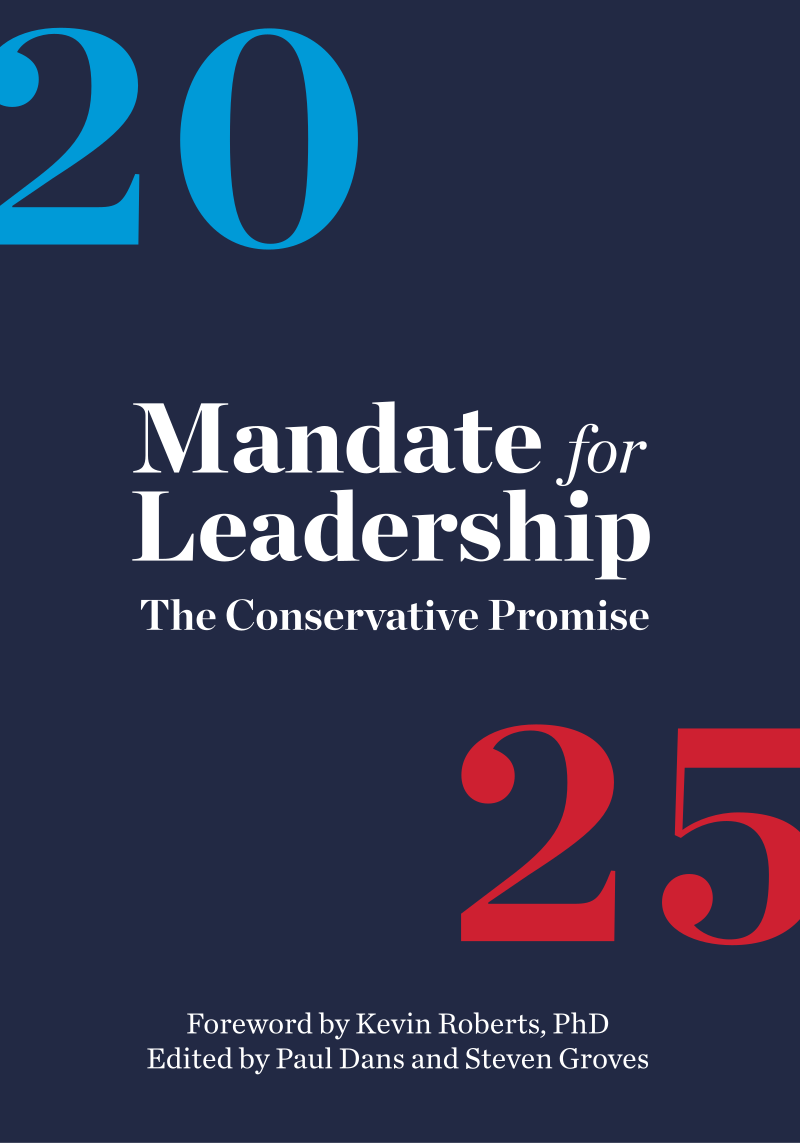
“Reject ratification of the Comprehensive Test Ban Treaty,” it advises “and indicate a willingness to conduct nuclear tests in response to adversary nuclear developments.”
And as pundits are noting, Project 2025 is starting to read like a to-do list for the White House.
So whether the result of a misunderstanding or a the launching of a plan put forward by the Heritage Foundation, it appears that the world may soon be getting a wee bit more dangerous and that parents worldwide may soon be yelling at their kids, “Do NOT drink that milk!”